
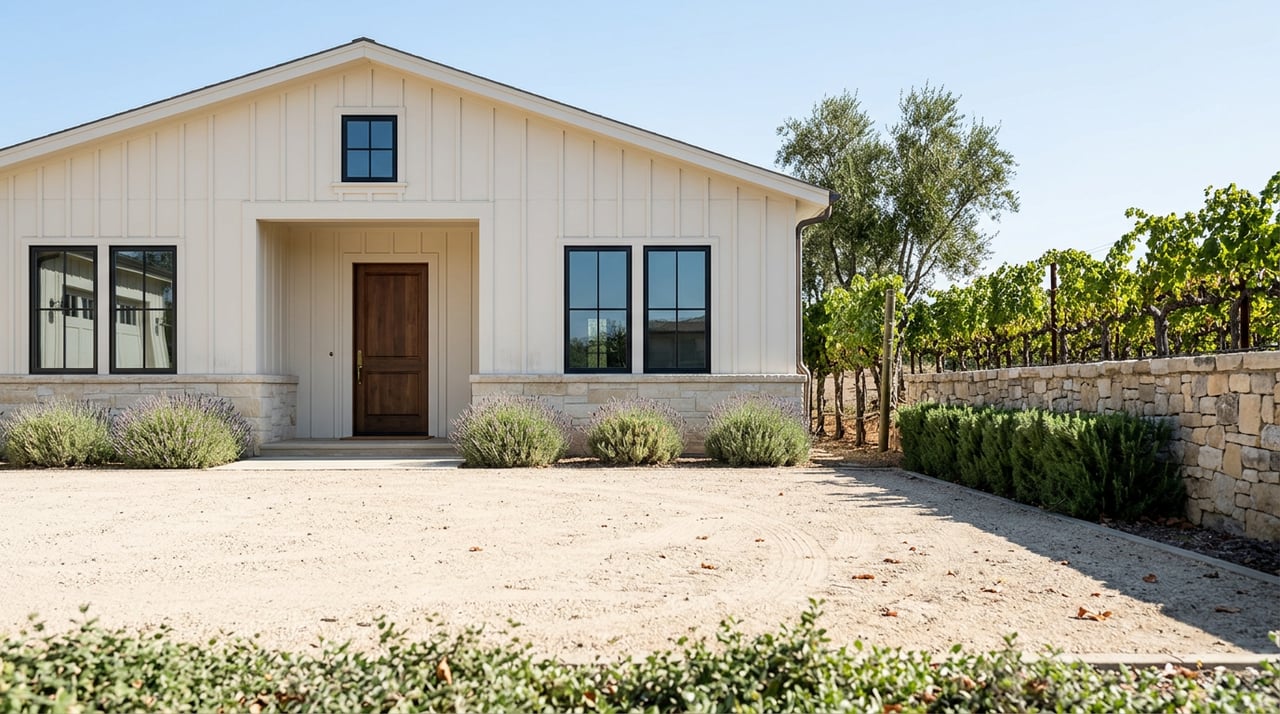
A listing for five acres off Rancho California Road can promise vineyard views, a wine trail address, and strong rental potential in the same paragraph. What it usually won't tell you is which side of an invisible boundary the parcel sits on. That boundary, not the acreage or the view, decides whether you can legally rent the place out for a weekend.
The boundary runs between the City of Temecula and unincorporated Riverside County. Cross it and everything about short-term rental income changes.
The city banned it. The county didn't. Buyers blur the two.
Short-term rentals are prohibited inside Temecula city limits. The city reaffirmed that ban in January 2020 and raised the fine for operating one anyway to $1,000 a day. There is no permit path, no waiver, no exception for a great location. If a parcel sits inside the city, the "rental potential" line in a listing description is aspirational at best.
Most of what buyers picture when they hear the phrase "Temecula Wine Country," the vineyard-view acreage and multi-acre estate lots east of town, actually sits in unincorporated county territory, where short-term rentals are legal under a permitting system the county calls Ordinance No. 927. That's the good news. The complication is what comes next.
Four named districts, one tight ceiling, and less room than it looks
The county doesn't treat Wine Country as a single zone. Its own planning department divides the policy area into four distinct districts, a Winery District, a Residential District, an Equestrian District, and a North Wine Country District, each tracked separately for permitting purposes, with a further carve-out on the north end called the North Pocket Area. Those district lines were set under a 2023 amendment and remain in place today.
What matters more than the district lines is the ceiling sitting on top of all of them. Wine Country holds close to 998 dwellings, and the county has said the overall number of short-term rental certificates it will allow across the entire policy area will stay at just over 100. Sit with that ratio for a second. Even at full build-out, something close to one in ten Wine Country homes could ever hold a certificate. That scarcity is exactly why an existing certificate carries real value, and why a seller mentioning "active STR income" is really advertising a scarce permit, not a guaranteed feature of the house.
Because the four districts are tracked separately, a certificate holder in one district giving up their permit doesn't free up room in another. When a given district is already full, the county only reopens applications there through a lottery once the certificate count in that specific district drops below its own cap. A buyer eyeing a parcel in a district that's already at capacity can't out-negotiate that math with a stronger offer.
The certificate doesn't come with the house
This is the detail that catches buyers who assume a seller's rental income history transfers with the sale. It doesn't. Riverside County requires a new owner to apply for their own certificate, and a change of ownership resets the process from zero.
There's a related wrinkle for anyone thinking about Wine Country property as a multi-generational hold rather than a straight purchase. County supervisors debated in 2023 whether certificates should pass automatically to family members inheriting or receiving a property transfer, and the compromise they landed on restricts family transfer specifically in Wine Country segments the county considers already saturated with rentals. If you're weighing a Wine Country purchase alongside estate or Prop 19 planning, that's worth working through before escrow closes, not after.
Aug. 25 is the day two decisions land on the same table
Here's what makes this particular month different from any other month to be shopping in Wine Country. On July 28, 2026, the Board of Supervisors gave first-round approval to Ordinance No. 927.3, a package that raises the cost and lowers the tolerance for operating a short-term rental in unincorporated Riverside County. The fee study behind it sets the initial application fee at $1,077 for fiscal year 2026-2027, up from $740, and the annual renewal at $775, up from $540. The threshold for suspending a certificate drops from five citations to three in a twelve-month span, and revocation proceedings can now start after five instead of seven. The county is also scrapping the sixty-minute grace period that used to let an operator fix a problem before an officer got involved, replacing it with immediate response.
Supervisor Chuck Washington summed up the board's mood before casting his vote, telling colleagues the county was still "trying to find the recipe for the magic sauce" on enforcement. The final adoption vote for Ordinance 927.3 is scheduled for Aug. 25, 2026.
The same day, the board is set to vote on something pulling in the opposite direction: renewing the Temecula Wine Country Tourism Marketing District, the 2 percent assessment on gross short-term rental and hotel revenue that funds Visit Temecula Valley's marketing push to keep rooms and rentals booked. That renewal, if approved, extends the district through December 31, 2031. So on the same date, the county is positioned to make it more expensive and less forgiving to operate a short-term rental, while also renewing the fund that pays to market Wine Country as a destination worth booking. The county isn't closing the door on this asset class. It's raising the toll while keeping the marketing lights on.
What this actually costs to run
Before writing an offer on a Wine Country parcel with rental income in mind, the honest math includes more than the purchase price. Layer in the new application and renewal fees, the county's transient occupancy tax, and the 2 percent tourism district assessment on top of nightly revenue, and the margin looks different than it did under the old fee schedule. None of that disqualifies the strategy. It just means the number on a five-year-old listing sheet isn't the number you'll actually see on a 2027 profit and loss statement.
Before you write an offer
- Confirm the parcel sits in unincorporated county territory, not inside Temecula city limits. The city's own short-term rental page states the prohibition plainly, and it's worth checking directly rather than trusting a listing description.
- Identify which of the four Wine Country districts the parcel falls into, since certificates are tracked separately by district and one district filling up doesn't affect room in another.
- Ask the current owner directly whether they hold an active certificate, and don't assume it conveys with the sale. It doesn't.
- Call the county Planning Department to ask where that district's certificate count sits relative to its cap, and whether a lottery window is open or likely to open.
- Model cash flow against the new fiscal year 2026-2027 fee schedule and the tighter citation thresholds, not numbers that were current a year ago.
- Watch the outcome of the Aug. 25 hearing before finalizing anything, since it sets the fee and enforcement rules you would actually operate under.
Frequently asked questions
If a listing says "Temecula Wine Country," does that mean short-term rentals are legal there? Not automatically. The phrase gets used loosely to describe the whole area east of the city, but only parcels in unincorporated Riverside County qualify for a short-term rental certificate. Parcels inside Temecula city limits cannot legally operate one regardless of how a listing describes the location.
What happens if the district I want is already at its cap? No new certificates get issued in that district until the count drops below its ceiling. The county opens a lottery window for that district only once there's room again, so a parcel's rental potential can depend on whether an existing owner elsewhere in the same district gives up a certificate.
Does the Aug. 25 vote affect owners who already have a certificate? Existing certificate holders operate under whichever version of Ordinance 927 is in effect at their renewal date, so the new fee schedule and citation thresholds would apply starting at their next renewal cycle if 927.3 is adopted as proposed.
If you're weighing a Wine Country purchase against this math, or trying to figure out whether a specific parcel's district still has room under its cap, that's exactly the kind of groundwork Christine Cricket Smith Realty does before a client ever writes an offer. Christine has spent years on the landlord side of these calculations herself, managing her own rental units and walking investors through the fine print that separates a good Wine Country purchase from an expensive lesson. Let's get you the keys. Book a free consultation.
