
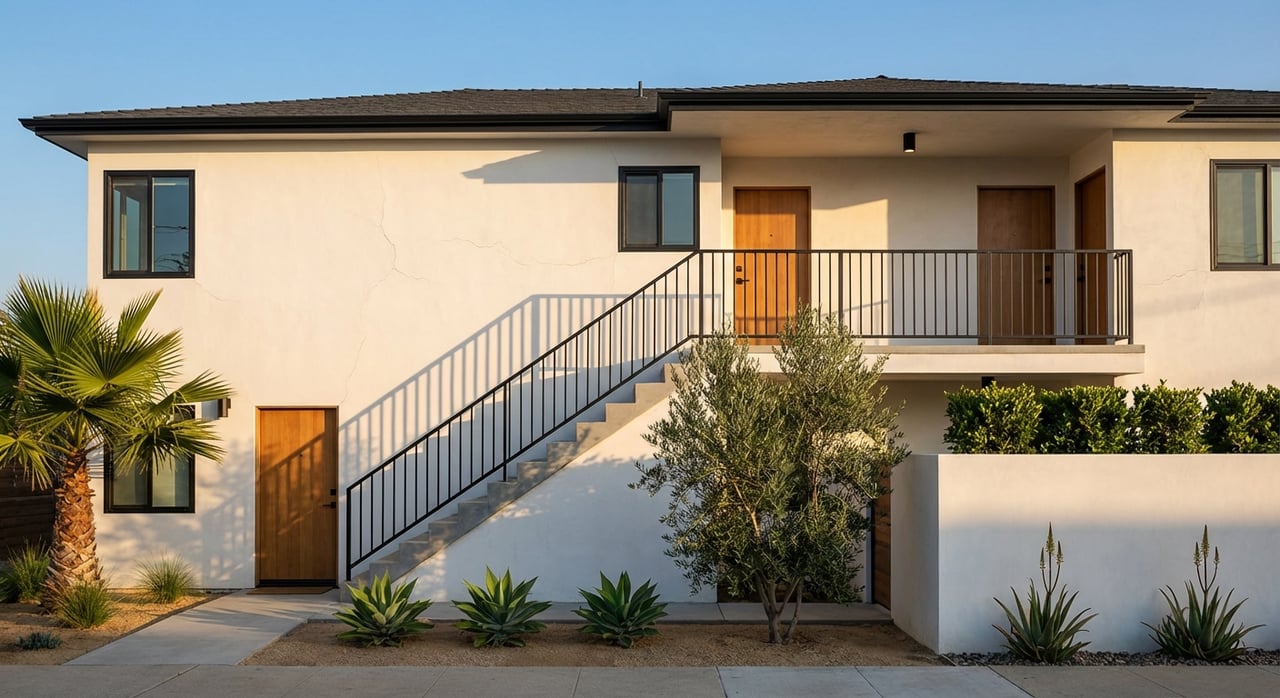
Are you looking for a smart way to build long-term wealth while keeping your options flexible? Small multifamily properties in Riverside can give you rental income, tax advantages, and the chance to live in one unit while tenants help pay the mortgage. If you are new to investing or you are ready to scale beyond a single-family rental, this guide walks you through local price and rent ranges, underwriting basics, neighborhoods to target, and what to check before you buy. Let’s dive in.
Why Riverside for small multifamily
Riverside rents sit above the national average yet below coastal Southern California, which helps both cash flow and demand. Recent rent trackers put a typical citywide rent around the low to mid $2,000s per month, with 1-bedroom apartments often around $2,000 to $2,400 and 2-bedrooms around $2,400 to $3,000 depending on location and condition. Neighborhood, unit size, renovations, parking, and in-unit laundry can all shift the range.
Regional occupancy in the Inland Empire has been strong relative to national averages. Industry summaries place recent occupancy near the mid 90s, which implies vacancy in the 4 to 6 percent range and steady demand for attainable rentals. You can use a 5 percent vacancy allowance as a conservative baseline when you model income and expenses. For context on these assumptions, see the Inland Empire overview in this rental investor playbook that discusses stable occupancy and conservative underwriting practices in California markets like Riverside: Inland Empire occupancy context.
Cap rates in the Inland Empire have generally expanded from 2021 to 2022 peaks. Many small multifamily deals in Riverside County have been trading around the mid to high 5 percent range, with stronger locations or newer townhome-style assets sometimes lower. Your final going-in cap will depend on the specific building’s rents, expenses, condition, and financing terms.
Price ranges and real examples
Prices vary by neighborhood, unit mix, age, parking, separate meters, and how much deferred maintenance you will inherit. Based on recent 2024 to 2026 activity in the city of Riverside:
- Duplexes (2 units): about $600,000 to $1.5 million. Lower prices typically reflect smaller lots, older systems, or shared meters. On the lower end, recent listings have started near the mid $600,000s. On the higher end, renovated or larger-lot properties with owner-occupant appeal have reached into the $1.4 to $1.5 million range.
- Triplexes (3 units): roughly $700,000 to $1.2 million+. Newer or well-upgraded triplexes in good rental corridors have closed around the low $1 millions. A simple cross-check is price per door. For example, a $1.125 million sale for three units equals about $375,000 per unit.
- Small apartments (4 to 20 units): often quoted by price per unit. Inland Empire properties commonly show a wide band, roughly $180,000 to $400,000+ per unit, depending on class and location. As a reference, a recent 34-unit sale in Riverside penciled near $228,000 per unit, while newer townhome-style assets can price much higher per door.
Tip: Always compare per-door pricing to current and market rents, then look at the cap rate implied by verified expenses. A lower per-unit price does not always mean a better deal if rents are under market or the building needs heavy work.
What drives value
- Unit mix and size. Larger 2- and 3-bedroom units tend to command higher gross rent per door, which can improve income stability.
- Separate meters. Gas, electric, and sometimes water submetering can reduce your operating expense ratio and risk.
- Parking and lot size. On-site parking and usable outdoor space support rent and tenant retention.
- Condition and upgrades. Newer roofs, updated plumbing and electrical, modern kitchens and baths, and in-unit laundry can support higher effective rents.
- Location drivers. Proximity to employment centers, universities, transit, and major arterials like University Avenue and Magnolia Avenue can keep days on market low for rentals.
Underwriting basics that make or break a deal
Start with a conservative model. Then test sensitivity so you are not surprised by small shifts in vacancy, expenses, or financing.
Core inputs checklist
- Gross Potential Rent (GPR): Sum of in-place and market rents. Cross-check with several recent local lease comps.
- Vacancy allowance: Use 4 to 7 percent for stabilized Riverside small multifamily. A 5 percent baseline is a practical starting point given Inland Empire occupancy trends discussed here: Occupancy context and conservative assumptions.
- Operating expense ratio: Many investors use the “50 percent rule” as a quick screen, then refine with a line-item budget. Treat it as a conservative filter, not your final number: 50 percent rule overview.
- Property management: Budget about 6 to 12 percent of collected rent for full service. Small buildings often sit at the higher end of that range: Property management fee ranges.
- Reserves (CapEx): Set aside $250 to $500 per unit per year, with older buildings on the higher end: How to budget capital expenditures.
- Property taxes: California’s baseline is about 1 percent of assessed value under Prop 13 plus voter-approved additions. Verify the property’s Tax Rate Area and any supplemental bills after closing: Prop 13 background.
- Insurance, utilities, and local fees: Get local quotes. Insurance can vary by building age and location.
Cap rate, NOI, and what they tell you
- Cap rate = Net Operating Income (NOI) ÷ Purchase price. NOI equals Effective Gross Income minus Operating Expenses, excluding your mortgage payment. Use going-in cap to compare assets, and an exit cap to model sale price. If the going-in cap is below your cost of debt, cash flow will be tight without value-add upside. For a deeper primer, see this explanation of capitalization rates: Cap rate explanation.
A simple Riverside duplex pro forma
Assume a 2-unit purchase price of $800,000.
- Rents: Unit A (2-bed) $2,300 per month; Unit B (3-bed) $3,000 per month. Total GPR = $5,300 per month = $63,600 per year.
- Vacancy at 5 percent → Effective Gross Income (EGI) ≈ $60,420 per year.
- Operating expenses at 45 percent of EGI → ≈ $27,189 per year.
- NOI ≈ $33,231 → Going-in cap ≈ 4.15 percent.
Now test sensitivity:
- If expenses run at 50 percent of EGI, NOI drops to about $30,210 → Cap around 3.78 percent.
- If you reduce vacancy to 4 percent and hold 45 percent expenses, NOI rises to about $33,945 → Cap around 4.24 percent.
Small changes matter. Use conservative numbers until you verify leases, utility bills, and a real management quote.
Financing: 2–4 units vs 5+ units
- 2–4 units (owner-occupied): Often eligible for residential financing, including conventional programs and certain low down payment options when you live in one unit. Fannie Mae’s HomeReady program outlines underwriting methods and requirements for eligible buyers. Check program rules and income limits here: Fannie Mae HomeReady guidance.
- 2–4 units (non-owner): Typically financed with conventional investment loans that require higher down payments and show tighter debt-to-income limits.
- 5+ units: Financed with commercial multifamily loans. Underwriting focuses on the property’s NOI, debt service coverage, and market conditions rather than personal income.
Practical tip: Speak with a lender early. Ask for a side-by-side of down payment, interest rate, mortgage insurance (if any), and estimated cash flow for each path.
Where to find small multifamily in Riverside
Many small multifamily opportunities sit in Riverside’s older, more central neighborhoods and along established corridors. Start your search in:
- Downtown and University areas: Historic housing stock and proximity to the University of California, Riverside often mean consistent rental interest for well-located units.
- Arlington and Magnolia Center: Classic single-story and small-garden buildings are common, with access to Magnolia Avenue and local retail.
- La Sierra and Canyon Crest: Mix of single-family and multifamily pockets, with access to major routes and employment nodes.
- Victoria area: Tree-lined streets and older character properties create occasional duplex and triplex options.
For an overview of city neighborhoods, visit Riverside’s official pages and drill into your target areas: Riverside neighborhoods overview. Expect rents and pricing to vary by building age, modernization, parking, and proximity to jobs, schools, and services. Keep language neutral when comparing areas and focus on property features and access to amenities.
Due diligence checklist for small-multifamily deals
Use this as your quick-reference list when you go under contract:
- Financials and leases: Request the trailing 12 months P&L, a current rent roll, copies of active leases, utility bills, and repair invoices. Match deposits and pro-rate rent carefully at closing.
- Meters and utilities: Confirm separate gas and electric meters. Ask for water and sewer details and whether any RUBS or submetering is in place.
- Taxes and assessments: Review the property’s assessment history, understand Prop 13 implications, and budget for potential supplemental bills after purchase. The county’s annual roll provides helpful context: Riverside County Assessor overview.
- Building systems: Inspect roof, foundation, plumbing, electrical, HVAC. Build a 3- to 5-year capital plan and set reserves, often $250 to $500 per unit per year: CapEx reserve guidance.
- Management and vacancy: Get two to three local management quotes, including fees and lease-up expectations: Typical management fee ranges.
- Regulations: Review statewide tenant protections such as AB 1482 and confirm if any city-level rules apply. Many properties are subject to annual rent increase caps with specific exemptions. Start here for a general overview and verify details with your attorney or property manager: California tenant protections context.
- Stress test your pro forma: Model vacancy plus or minus 2 percentage points, expenses plus or minus 5 points, and an exit cap that is 50 basis points higher than your going-in cap.
How we help you invest with confidence
You deserve more than a listing alert. You need an advisor who speaks landlord, knows the Riverside street grid, and can underwrite like an operator. As a boutique, community-rooted team with hands-on experience owning and managing rentals, we help you target the right submarkets, verify income and expenses, and plan improvements that tenants value. Whether you aim to house hack a duplex or trade into a small apartment via 1031, we’ll walk you through every step from financing strategy to lease-up.
If you are ready to explore small multifamily in Riverside, let’s connect for a focused, data-backed plan tailored to your goals. Reach out to Christine Cricket Smith Properties to start your search.
FAQs
What counts as a “small multifamily” property in Riverside?
- Typically 2 to 20 units. Duplexes, triplexes, fourplexes, and small garden buildings fall into this bucket, with 2 to 4 units often eligible for residential financing if owner-occupied.
How should I estimate rents for a duplex or triplex?
- Start with a conservative range based on recent 1- and 2-bedroom rents in your target area, then adjust for unit size, condition, amenities, and parking. Verify with multiple recent lease comps before you close.
What vacancy rate should I use in my Riverside underwriting?
- A 5 percent vacancy allowance is a common baseline for stabilized properties in the Inland Empire, with a reasonable band from 4 to 7 percent depending on asset quality and management.
What are typical operating expenses for small multifamily?
- A quick screen uses the 50 percent rule, then you refine by line item for taxes, insurance, management, utilities, maintenance, and reserves. Older buildings or those with shared utilities may run higher.
What financing options exist for 2–4 unit owner-occupied purchases?
- Conventional and certain low down payment programs may be available when you live in one unit. Review Fannie Mae’s HomeReady guidance, then confirm eligibility and pricing with your lender.
Where in Riverside should I look for duplexes and triplexes?
- Start with Downtown, University, Arlington, Magnolia Center, La Sierra, Canyon Crest, and Victoria. Focus on buildings near jobs, services, and transit, and compare per-door pricing to verified market rents.
What regulations should I know before I buy?
- Review statewide tenant protections like AB 1482, check for any city-specific rules, and confirm exemptions. Factor legal compliance and potential rent caps into long-term cash flow and renovation plans.
