
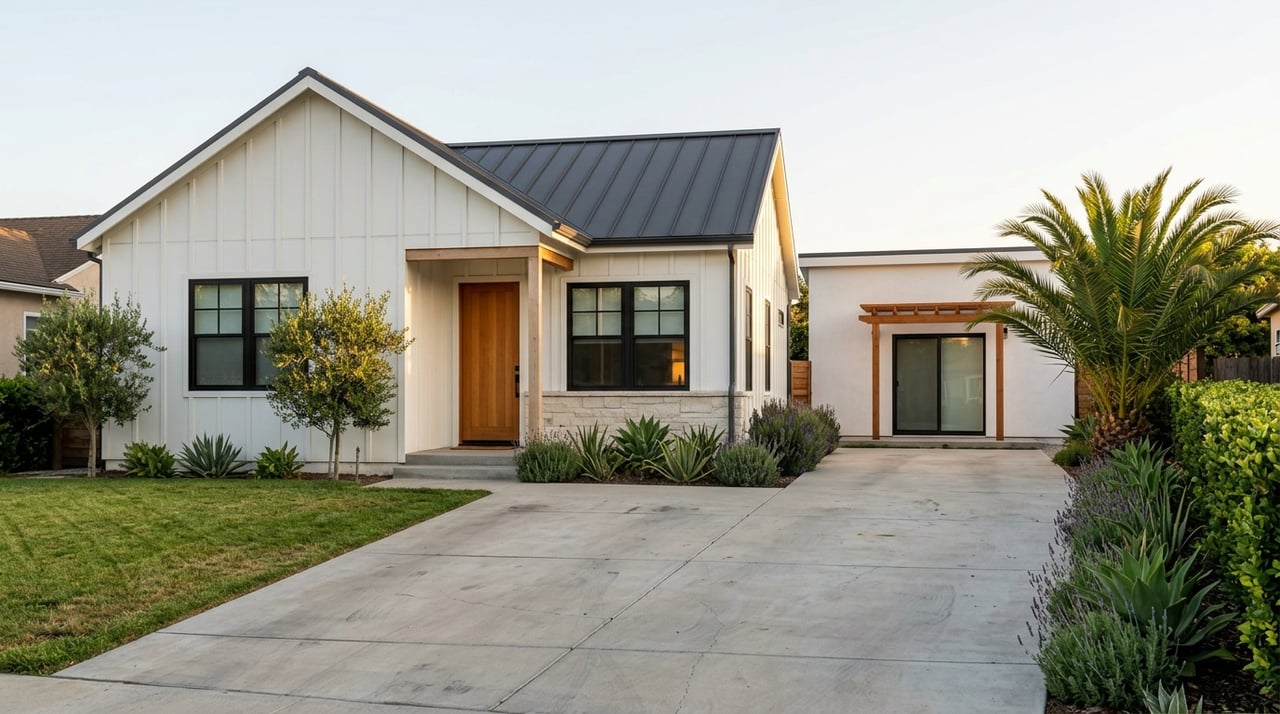
If Riverside home prices make you wonder whether buying is still realistic, you are not alone. With a median sale price of $630,000 in March 2026 and a median rent of $1,801 in June 2026, many buyers are looking for ways to make ownership feel more manageable. That is where house hacking can help, especially if you want to live in the property and use rental income to offset part of your monthly cost. In this guide, you will learn which house hacking strategies fit Riverside best, where financing gets tricky, and how to think like a smart buyer before you make an offer. Let’s dive in.
Why house hacking matters in Riverside
For many Riverside buyers, the challenge is simple: ownership costs can feel much higher than renting. House hacking gives you a way to close part of that gap by choosing a property that lets you earn income while you live there.
In practice, that could mean renting out a bedroom, buying a home with an existing ADU, converting part of a property into a legal rental unit, or purchasing a small multifamily property and living in one unit. The right choice depends on your budget, comfort level, and loan program.
The biggest advantage is flexibility. You are not limited to one path, and Riverside offers local rules that make some strategies more workable than they are in other cities.
Best house hacking strategies in Riverside
Rent out a room
If you want the lowest-friction entry point, renting out a room is often the easiest place to start. You buy a home you can comfortably live in, then bring in a housemate to help with monthly expenses after closing.
This strategy can improve your real-life affordability, but there is an important financing catch. Fannie Mae says boarder income in a principal residence is generally not acceptable as stable qualifying income, except in limited situations.
That means future room rent may help your budget once you own the home, but it may not help you qualify for the mortgage during preapproval. For many buyers, that distinction is the key lesson.
There is one notable exception. A first-time buyer using Fannie Mae HomeReady may be able to count boarder income on a one-unit property if the boarder has lived with the borrower for the prior 12 months and the rent payments are documented, with the amount capped at 30% of total gross income used to qualify.
Buy a home with an ADU or JADU
In Riverside, this is one of the strongest long-term house hacking plays. The city states that all residential properties are eligible for at least one ADU and one JADU, which opens the door for buyers who want more than just a roommate setup.
An ADU can be attached, detached, or created by converting existing space. Riverside says that can include a garage, workshop, guest quarters, or part of the main home, which makes older properties with extra structures especially interesting for buyers who want future rental potential.
Riverside also allows ADUs and MADUs to be rented separately from the primary dwelling for periods longer than 30 days. No additional parking is required, which can remove one hurdle that often slows down these projects in other markets.
JADUs can also be rented, but the city requires owner occupancy on at least one unit. That makes a JADU better suited to a shared-primary-residence approach than a fully separate investment-style setup.
If you are buying with this strategy in mind, pay close attention to whether the unit already exists or would need to be built or legalized. Existing structures can offer a lower-cost path, but some may need code upgrades before they can be occupied legally.
Buy a duplex, triplex, or fourplex
If you want a cleaner income-producing setup, a small multifamily property can be a strong fit. You live in one unit and rent the others, which gives you a more traditional house hacking model with built-in separation between owner space and rental space.
FHA financing allows one- to four-family owner-occupied principal residences, with down payments as low as 3.5% on one- to four-unit properties. For buyers who can qualify, that can make a duplex, triplex, or fourplex more accessible than many people assume.
Fannie Mae HomeReady can also work for two- to four-unit principal residence properties and allows rental income from the property when documented. HomeReady requires a 3% minimum borrower contribution for two- to four-unit principal residences.
Compared with renting out a room, this path is often easier to explain to a lender because the rental units already exist as part of the property type. It is still not simple, but it can be more straightforward than trying to qualify based on a plan to rent space informally.
Qualifying income versus real cash flow
This is where many buyers get confused, and it matters a lot. A property can make sense as a house hack in your monthly budget even if the lender does not count all of the expected rent during underwriting.
Fannie Mae allows rental income from one existing ADU on a one-unit principal residence, but only in certain situations. The property must involve a purchase or limited cash-out refinance, only one ADU can be used, and the qualifying amount is capped at 30% of total qualifying income.
For two- to four-unit principal residences, rental income from the subject property may also be eligible when properly documented. In both cases, lenders typically want proof such as tax-return rental history, a current lease, or an appraisal-supported rent estimate, depending on the scenario.
The practical takeaway is simple: projected cash flow and qualifying income are not the same. Do not assume a future rent plan will automatically help you get approved, especially if the ADU is not yet built.
What to check before you buy
Confirm the property supports your strategy
Not every home that looks flexible on a listing photo is ready for a house hacking plan. If you are considering an ADU, garage conversion, or existing guest space, you need to verify whether the setup is legal, permitted, and usable for your intended purpose.
Riverside requires a building permit for ADUs, and plan check and permit issuance fees apply. Utility connections may be separate or tied into existing services, so it is worth understanding those details early because they affect both cost and project scope.
Ask about permit-ready ADU options
Riverside offers a permit-ready ADU plans pathway for some single-family residential sites. For the right property, this may help streamline the early review process and give you a clearer idea of what is possible before you commit to a full custom design.
If you are targeting house hacking through an ADU addition, this is a smart conversation to have at the property search stage, not after closing. It can help you compare homes based on realistic next steps rather than guesswork.
Watch for historic design constraints
Some Riverside properties in older areas may have additional design standards. Historic or cultural-resource parcels can face separate ADU design requirements, so buyers should verify that early when looking in neighborhoods with older housing stock.
This does not mean the strategy will not work. It just means your timeline, cost, and design options may look different from what you expected.
Budget for taxes and upgrades
If you plan to add an ADU or other new construction, remember that California property tax rules can increase assessed value for the new construction portion. That can lead to supplemental tax bills.
You should also budget for code upgrades if you are converting an older garage, workshop, or other structure. The lower entry cost can be attractive, but older improvements are not always move-in ready from a permitting standpoint.
How to choose the right house hack
The best strategy usually comes down to your starting point.
If you want the simplest first step, renting out a room may be the easiest way to reduce monthly costs after closing. If you want stronger long-term income potential, an ADU often offers more flexibility in Riverside. If you want the clearest mix of owner occupancy and rental income, a duplex, triplex, or fourplex may be the cleanest fit if you qualify.
Here is a simple way to think about it:
- Room rental: easiest to start, but may not help much with mortgage qualification
- ADU or JADU: strong long-term potential, but requires careful review of permits, costs, and financing rules
- Duplex to fourplex: more built-in structure for rental income, often appealing for buyers who want a clearer landlord setup
The right answer is not always the one with the highest theoretical income. It is the one that fits your budget, loan options, risk tolerance, and day-to-day comfort.
If you are exploring house hacking in Riverside, it helps to work with someone who understands both the buyer side and the landlord side of the equation. At Christine Cricket Smith Properties, you can get practical, local guidance on finding a property that fits your goals and your financing reality. Let’s get you the keys with a free consultation.
FAQs
Can you legally build an ADU on a Riverside residential property?
- Riverside states that all residential properties are eligible for at least one ADU and one JADU, but permits and project-specific review still apply.
Can room rental income help you qualify for a mortgage in Riverside?
- Not always. In general, Fannie Mae does not treat boarder income in a principal residence as stable qualifying income except in limited cases, including certain HomeReady scenarios with documented history.
Can you rent out a Riverside ADU separately from the main home?
- Yes. Riverside says ADUs and MADUs may be rented separately from the primary dwelling for periods longer than 30 days.
Is extra parking required for an ADU in Riverside?
- Riverside’s ADU FAQ says no additional parking is required for ADUs.
Can you house hack with an FHA loan in Riverside?
- Yes. FHA financing allows one- to four-family owner-occupied principal residences, with down payments as low as 3.5% on one- to four-unit properties.
Will future rent from a new ADU automatically count for mortgage qualification?
- No. Buyers should not assume that projected rent from a not-yet-built ADU will automatically be counted. Lenders typically require documentation, and Fannie Mae guidance focuses on existing ADUs and documented income.
